Ask an Expert: Can You Swim With Hearing Aids?


- Most hearing aids are water-resistant, not waterproof. Swimming with standard devices can damage electronics and void your warranty.
- If your hearing aids get wet, act fast: power off, remove batteries, pat dry, and use a dehumidifier overnight.
- For regular swimmers, ask your hearing care professional about waterproof models and daily moisture management.
Q: Can I Swim With My Hearing Aids?
A: Generally, no, but it depends on your device. Most hearing aids are water-resistant, meaning they handle sweat, light rain, or splashes, but water-resistant is not the same as waterproof. Submerging a standard hearing aid in a pool, ocean, or lake can damage its electronics and void your warranty1,2.
Water poses several risks: it can cause short circuits, chlorine and salt corrode internal components over time, trapped moisture leads to long-term damage, and a hearing aid that comes loose in water can be permanently lost1,2.
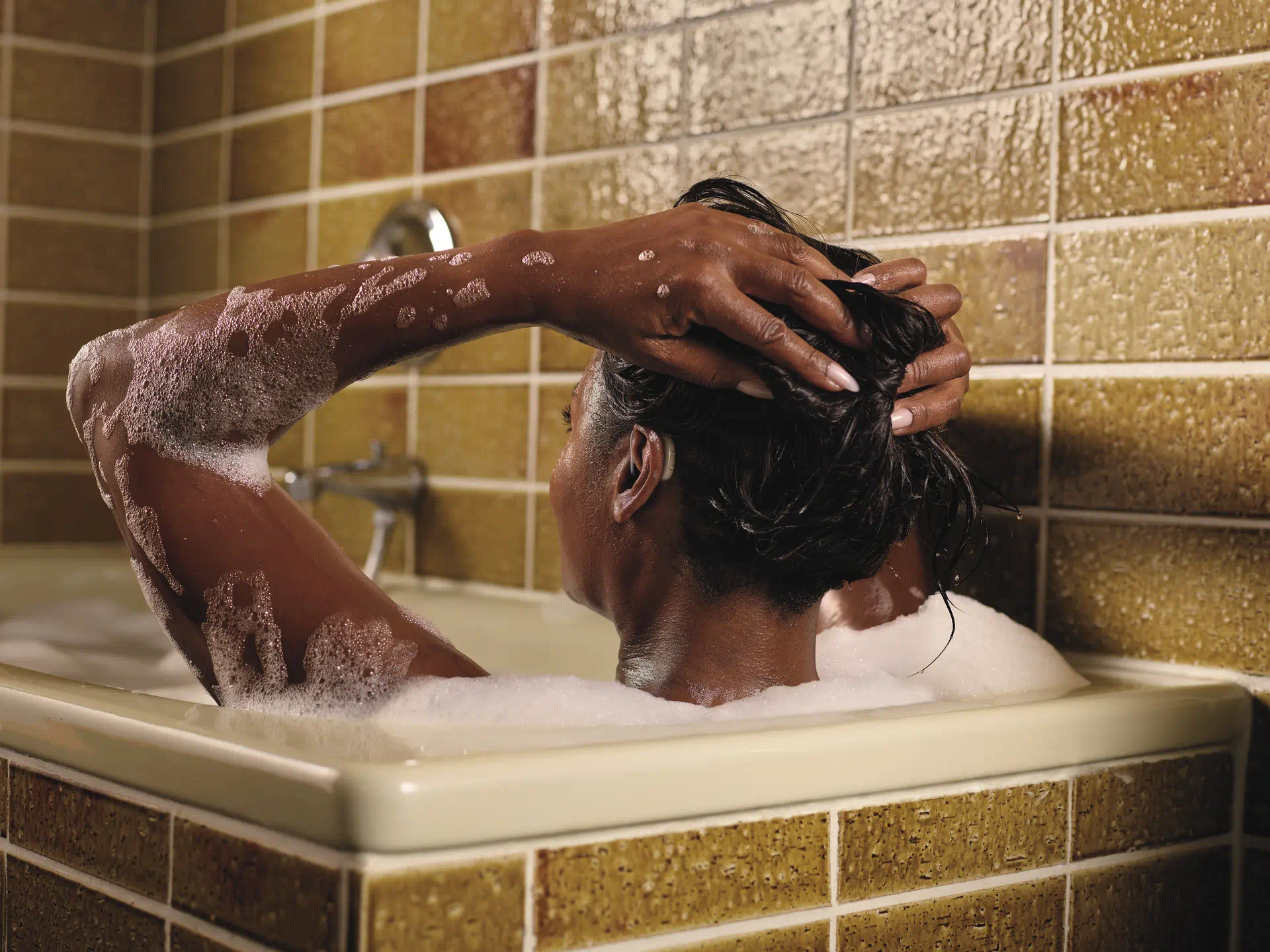
If your head stays above water and you are not submerging your ears, wearing water-resistant hearing aids with caution is generally acceptable
Make sure they are securely fitted, avoid splashing near your ears, and use a drying kit once you are done2.
If devices do get wet, power off immediately, remove any batteries, dry gently, and seek professional evaluation if they do not function normally once dry2.

Q: What Do IP Ratings Mean for Swimmers?
A: IP stands for Ingress Protection, a standardized rating showing how well a device resists dust and water.
The code has two digits: the first covers dust (0 = none, 6 = fully dust-tight); the second covers water (0 = none, 9 = high-pressure jets). An "X" means that category was not tested; not that protection is zero.
For hearing aid wearers, the water digit is what matters most1.

Q: Are Any Hearing Aids Truly Waterproof?
Water-Resistant Hearing Aids
Waterproof Hearing Aids
Waterproof hearing aids are specifically engineered for submersion, carrying manufacturer approval for swimming use. These models are typically larger due to their extensive sealing2.
If you are an avid swimmer who relies on amplification, speak with your hearing care professional about waterproof options. For someone who genuinely needs hearing assistance in the water, they can be life changing.
Q: What Should I Do if My Hearing Aids Get Wet?
A: Act quickly: the faster you respond, the better the chance of preventing permanent damage2.
Follow these steps:
- 1.Remove hearing aids and power off immediately.
- 2.Open the battery door, remove the battery, and leave the door open.
- 3.Gently pat dry with a soft cloth. Do not rub, shake vigorously, or use a hairdryer as heat damages electronics.
- 4.Place in a dry-aid kit or dehumidifier overnight.
- 5.If exposed to seawater or pool water, rinse lightly with clean fresh water first to remove corrosive salt or chlorine before drying.
- 6.If the device does not turn on once fully dry, take it to your hearing care professional.

Q: What Are the Best Tips for Hearing Aid Wearers Who Love Water Activities?
#1 Before and After Swimming
#2 Daily Moisture Management
#3 The Right Gear
Q: Is Seawater, Pool Water, or Fresh Water More Harmful?
A: All three can cause damage, but in different ways:
- Seawater is the most harmful type of moisture/water exposure. As it dries, it leaves salt crystals that corrode microchips, wiring, and battery contacts. Rinse with fresh water immediately and see your hearing care professional promptly2.
- Chlorinated pool water is also very harmful. Chlorine is chemically aggressive and corrodes the microphone, receiver, and battery contacts, leaving mineral deposits as it dries3,4. Rinsing and immediate drying are essential.
- Fresh water (rivers, lakes) is less chemically corrosive, but moisture ingress can still cause short circuits and internal damage3.
Q: What Are the Signs of Water Damage to My Hearing Aids?

Sources:
1 International Electrotechnical Commission: IEC 60529: Degrees of protection provided by enclosures (IP Code) (2013): iec.ch/ip-ratings
2 The Hearing Journal: Moisture in hearing instruments: Problematic, prevalent, and professionally preventable: doi.org/10.1097/01.HJ.0000823376.60686.5d
3 Journal of Otolaryngology ENT Research: Moisture study on nano-coated hearing aids (2016): doi.org/10.15406/joentr.2016.04.00104
4 Materials and Corrosion: A comparative study on corrosion failure analysis of hearing aid devices from different markets (2023): doi.org/10.1002/maco.202213420