Best Place to Buy Hearing Aids: Online vs Through an Audiologist


- Buying hearing aids online can be convenient and cost less upfront, but it can come with less personalized support.
- Buying hearing aids through a hearing care professional includes a personalized consultation, including a hearing assessment, professional fitting, programming, follow-up adjustments, and ongoing care.
- If you’re unsure which option is right, start with an online hearing screening, then follow up with a hearing check before buying.
Decision Factors Affecting Hearing Aids
Why Are Some Hearing Aids More Expensive?
Buying hearing aids can feel like a big decision and when you’re comparing prices, it’s understandable to question what you get for your money.
Here is a quick breakdown of the differences:

Buying Hearing Aids Online
What Buying Hearing Aids Online Actually Involves
Buying hearing aids online usually begins with a questionnaire and basic hearing check, before you assess the options and choose.
The device is sent to you, and support can be provided online or by phone. Some devices have preset programs, so you activate them by yourself, while others are adjusted through an app.
But online hearing aids are not always clinically fitted to your individual hearing profile, and they aren’t made to your own individual needs. OTC/DTC hearing aids suit mild to moderate hearing loss, but not all are FDA approved. Poor device selection can reduce benefit or cause harm, so caution is advised before purchase.
Buying Prescription Hearing Aids
What Does Buying Hearing Aids Through a Hearing Care Professional Involve?
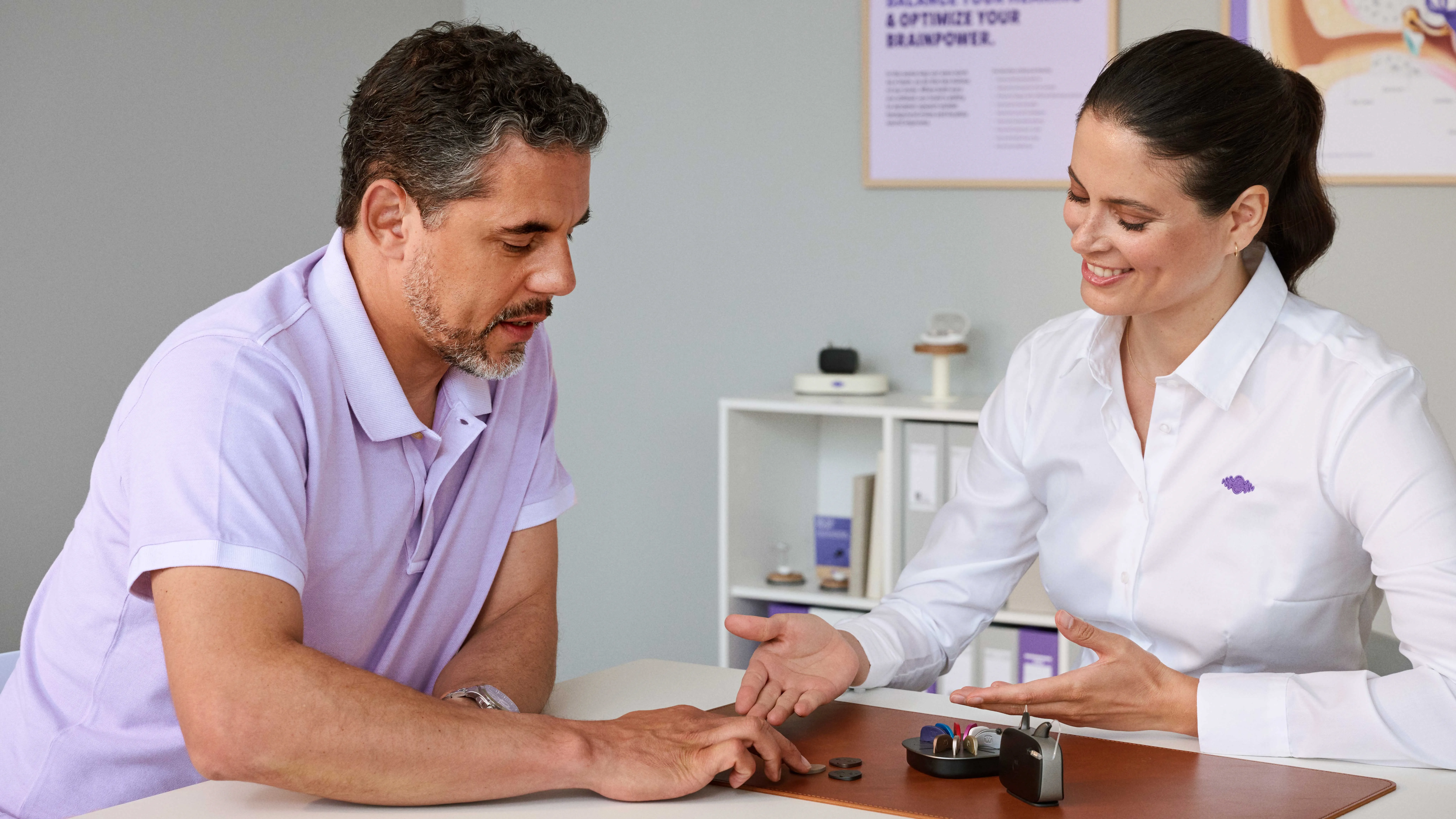
An appointment with a hearing care professional usually begins with a hearing assessment to understand the type and level of hearing loss.
The appointment will also cover your lifestyle, career, and hearing concerns. From there, the hearing care professional suggests suitable hearing aids, a hearing aid trial, fitting, programming, and makes adjustments.

Understanding Professional Hearing Aid Fittings
A professional fitting ensures your hearing aids are matched to your hearing needs, ear canal shape, and everyday listening needs.
Your hearing care professional will use real-ear measurement, which checks how sound is delivered inside your ear while the hearing aid is working. This helps fine-tune the device to your hearing prescription and ear canal acoustics.

Is It Okay to Buy Hearing Aids Online?
When Is an Online Hearing Aid Appropriate?
People who believe they have mild to moderate hearing loss, and want a lower-cost option, can buy online as an affordable option.
However, professional care is recommended if you’re experiencing severe or sudden hearing loss, ear pain, dizziness, or significant difficulty hearing. A professional assessment can also identify underlying medical causes of hearing loss that an online purchase process is not designed to detect.
Commonly Asked Questions
FAQs
Are hearing aids cheaper online than through a hearing care professional?
Can I take an online hearing test?
What support can I expect after buying my hearing aids?
The key difference between online hearing aids and prescription hearing aids is the level of personalized care and support.
Prescription hearing aids include customization, counseling, and ongoing engagement from a hearing care professional.
Aftercare for online hearing aids depends on the seller’s terms and conditions, including return and refund policies, and customer support may be limited. If the devices feel uncomfortable or do not work as expected access to professional adjustments may be restricted.

Sources:
1 The Hearing Journal: Over-the-counter hearing aids: What do consumers need to know? (2023): researchgate.net/publication/367553611_Over-The-Counter_Hearing_Aids_What_Do_Consumers_Need_To_Know