How we can help

Hearing Aid Types Compared: RIC vs BTE vs All Custom Models (ITE, ITC, CIC, IIC)

Confused by hearing aid acronyms? This simple guide compares common hearing aid styles, from RIC and BTE to custom in-ear models, to help you find the right fit for your lifestyle before your first appointment.
Published 8/18/2026,
Updated 8/18/2026
3 min read
Hearing aidsTips and tricks
An audiologist assisting a man in selecting the right hearing aid product.
On this page
Key Summary
Key Summary
  • Hearing aids come in two groups: styles worn behind the ear (RIC and BTE) and custom styles worn inside the ear (ITE, ITC, CIC, and IIC). 
  • RIC styles are the most widely fitted, discreet, comfortable, and suited to most types of hearing loss. 
  • The right hearing aid style depends on your hearing, lifestyle, preferences, anatomy and dexterity. A hearing care professional will always guide the final recommendation. 

Understanding Hearing Aid Styles

What Are the Different Styles of Hearing Aids?

Hearing aids fall into two groups: styles worn behind the ear (RIC and BTE) and custom styles worn entirely inside the ear canal (ITE, ITC, CIC, and IIC)1.

If you’ve started researching hearing aids, you’ve probably come across terms like RIC, BTE, CIC, and IIC, and wondered about the difference. You’re not alone. If you’re new to hearing aids, some of the acronyms may feel unfamiliar at first. 

This guide explains each hearing aid style, compares them side by side, and helps you identify which might suit your lifestyle before you speak to an expert.  

A hearing care professional will always make the final recommendation based on a full hearing assessment. Think of this as your preparation for that conversation. When you’re ready, book an appointment with one of our friendly hearing care professionals.

Get a new career with HearUSA as a Client Experience Specialist

Book Your Free Hearing Screening with HearUSA

  • Free screenings & hearing aid demos
  • 380+ locations with 400+ experts
  • Voted Best Nationwide Hearing Aid Solutions Company 2025
Find your local hearing center

Comparing Hearing Aid Styles

The table below gives you a quick overview.
Feature
Feature
BTE
RIC
Custom In-Ear (ITE, ITC, CIC, IIC)
Where it sits
Where it sits
Behind the ear, tube to ear mold
Behind the ear, thin wire to ear connected to a small ear tip that sits in the canal (not visible)
Inside the ear or ear canal
Visibility
Visibility
Most visible
Discreet
Moderate to low visibility depending on style and anatomy (IIC)
Best for
Best for
Severe to profound hearing loss; dexterity challenges
Mild to severe hearing loss; everyday versatility; advanced features and connectivity
Mild to moderate hearing loss; discretion preference
Rechargeable
Rechargeable
Some models
Yes, most common
Limited, however most models are now introducing rechargeable options
*All 3 depending on the level of technology per model.
Have the opportunity to test if you have hearing loss through the website

Test Your Hearing From Home - 100% Free Online Hearing Test

  • Instant results in under 5 minutes
  • 100% free at-home testing
  • Simple to use with any headphones
Test your hearing from home

Behind-The-Ear Hearing Aid Styles

Receiver-In-Canal (RIC) Hearing Aids

How it works: For RIC (receiver-in-canal) hearing aids, a small processor sits behind your ear and connects via a thin wire to a tiny speaker (receiver) in your ear canal. RIC hearing aids are slim, discreet, and comfortable for all-day wear. Because the microphone and receiver are separated, RIC styles typically deliver natural sound quality with less feedback than other styles2.
Best suited to: One of the most recommended styles, it works well for mild to severe hearing loss1. A popular choice for glasses wearers, active users, and those who want a balance of discretion, performance and price.
widex hearing aids
RIC hearing aids offer a comfortable, discreet fit with excellent sound quality.

Key features

  • Discreet and lightweight 
  • Available with rechargeable batteries across most models 
  • Bluetooth streaming and smartphone app compatibility on most models 
  • Natural sound quality with reduced feedback 
  • Suitable for mild to severe hearing loss1

Behind-The-Ear (BTE) Hearing Aids

How it works: For BTE hearing aids, the full device sits behind your ear and delivers sound through a small tube to a custom-fitted ear mold. BTE styles are larger than RIC hearing aids, are easier to handle, and are built to deliver powerful amplification1.
Best suited to: Often recommended for more significant hearing loss where stronger amplification is needed1, or for users who find smaller devices difficult to manage due to dexterity challenges. 
Wearing a hearing aid gives you a whole new life interacting with your surroundings and provides you with the sharpness you need at your workplace
BTE hearing aids combine powerful sound with a comfortable, easy-to-use design.

Key features

  • Provides powerful amplification 
  • Larger size is easier to handle 
  • Custom ear mold for a secure fit 
  • Suitable for severe to profound hearing loss1

Custom In-Ear Hearing Aid Styles

Custom In-Ear Hearing Aids: ITE, ITC, CIC, and IIC Explained

All custom in-ear hearing aid styles are molded to fit your exact ear canal shape3. The key difference is how deep each one sits, which affects visibility, ease of handling, and available features1.

ITE (In-The-Ear) Hearing Aids

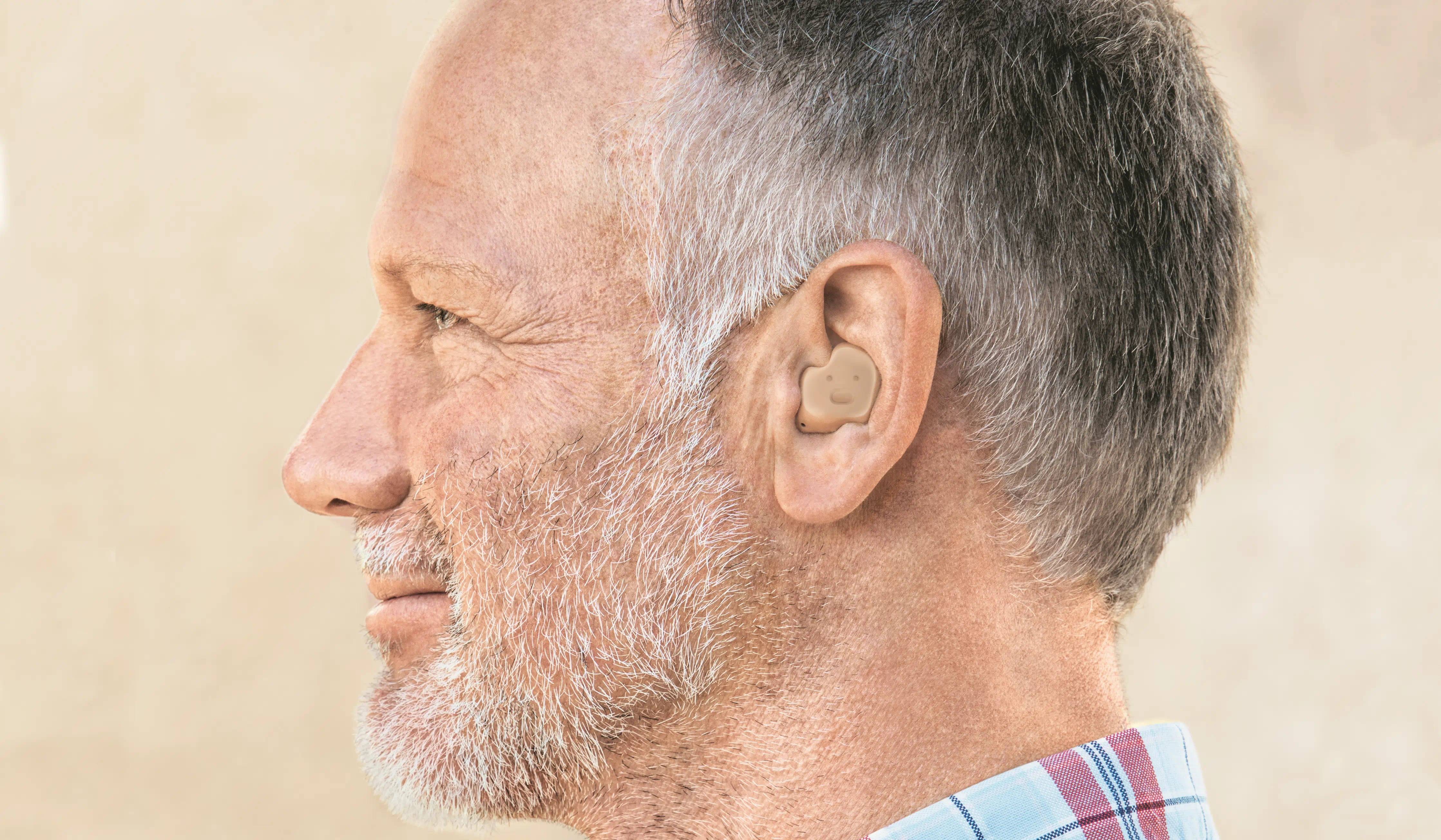
What it is: In-the-ear hearing aids are the largest custom in-ear style, filling the outer bowl of the ear4.
Best suited to: Hearing aid wearers who want a custom in-ear device but prefer something easier to insert, remove, and adjust. The larger size allows for manual volume controls on the device itself4.
signia insio ite ix hearing aids
ITE hearing aids provide a comfortable custom fit and are easy to insert and use.

Key features:  

  • Easiest to insert and remove  
  • May include manual controls  
  • Most visible of the custom in-ear styles  
  • Suitable for mild to moderately severe hearing loss1
  • Many come rechargeable and Bluetooth-capable compared to other custom styles

ITC (In-The-Canal) Hearing Aids
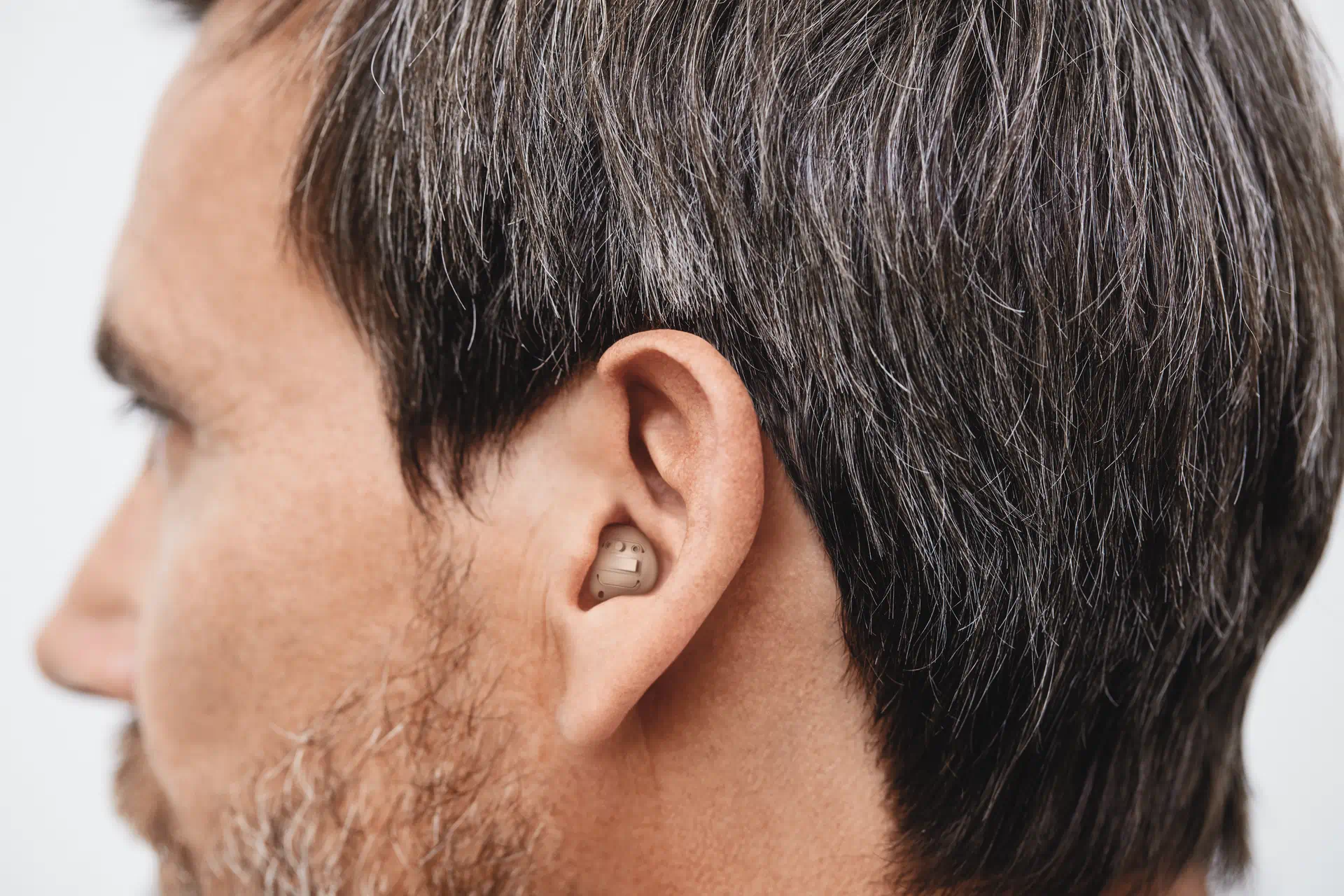
What it is: ITC hearing aids are smaller than ITE styles but more visible than CIC or IIC styles. For ITC styles, the device sits partially inside the ear canal.
Best suited to: A practical middle ground for people who want more discretion than ITE offers without going fully invisible, as well as ease of use. Some models include limited manual controls.
signia insio itc ix hearing aids
ITC hearing aids combine a discreet fit with practical everyday usability.

Key features:  

  • More discreet than ITE styles  
  • Some manual controls available depending on model 
  • Suitable for mild to moderate hearing loss1
  • Many come rechargeable and Bluetooth-capable compared to other smaller custom styles

CIC (Completely-In-Canal) Hearing Aids

What it is: CIC hearing aids sit deep inside the ear canal and are largely hidden in day-to-day conversations. 
Best suited to: Those who want a discreet device. Deep placement also reduces wind noise naturally, a bonus for people who spend time outdoors1.
Man wearing Signia Insio Charge&Go CIC IX hearing aids seen from the side
CIC hearing aids are designed to be discreet while delivering clear, everyday hearing support.

Key features

  • Largely invisible during day-to-day use 
  • Natural wind noise reduction 
  • Usually uses disposable batteries 
  • Suitable for mild to moderate hearing loss1
  • Shorter battery life due to size

IIC (Invisible-In-Canal) Hearing Aids

What it is: IIC hearing aids are the deepest-fitting and most discreet hearing aid style, virtually undetectable when worn. 
Best suited to: Hearing aid wearers who prioritize complete discretion. IIC requires a suitable ear canal shape and is typically recommended for mild to moderate hearing loss only4.
Wearing  nearly invisible hearing aids behind the ear
IIC hearing aids are virtually invisible and designed for maximum discretion.

Key features:  

  • Practically invisible when worn 
  • Requires a suitable ear canal shape without middle ear complications– not suitable for everyone 
  • Automatic adjustments  
  • Usually uses disposable batteries 
  • Mild to moderate hearing loss only4

Finding Your Perfect Fit

Which Hearing Aid Style Suits Your Lifestyle?

  • You wear glasses

    RIC or custom in-ear styles sit more comfortably alongside glasses frames1.

  • Discretion matters most

    If you prefer hearing aids that look like earbuds, choose IIC or CIC .

  • You find small devices tricky to handle

    ITE or BTE are easier to manage due to their larger size1.

  • You have an active lifestyle

    RIC or snug-fitting custom styles are practical for movement. 

  • You have significant hearing loss

    BTE or a powerful RIC style is likely to be recommended1.

  • Rechargeable batteries are a priority

    Most rechargeable options can be found in RIC hearing aid styles2, although this is changing.

There’s no single best hearing aid style; the right choice depends on your hearing, lifestyle, aesthetic, and ease of handling. Bring your preferences to your first appointment as a starting point for conversation. 
audiologist having conversation hearing loss

Ready to Find Your Perfect Fit?

Book a no-obligation hearing consultation at your nearest hearing care center today.
Book appointment

Sources:  

1 HearUSA: Hearing aid types (2026): hearusa.com/hearing-aids/types/ 

2 HearUSA: Receiver-in-Canal (RIC) Hearing Aids (2026): hearusa.com/hearing-aids/receiver-in-canal-ric/  

3 HearUSA: Custom Hearing Aids (2026): hearusa.com/blog/custom-hearing-aids/  

4 HearUSA: Best In-the-Ear (ITE) Hearing Aids (2026): hearusa.com/hearing-aids/in-the-ear-ite/