
What Happens at a Hearing Aid Fitting?
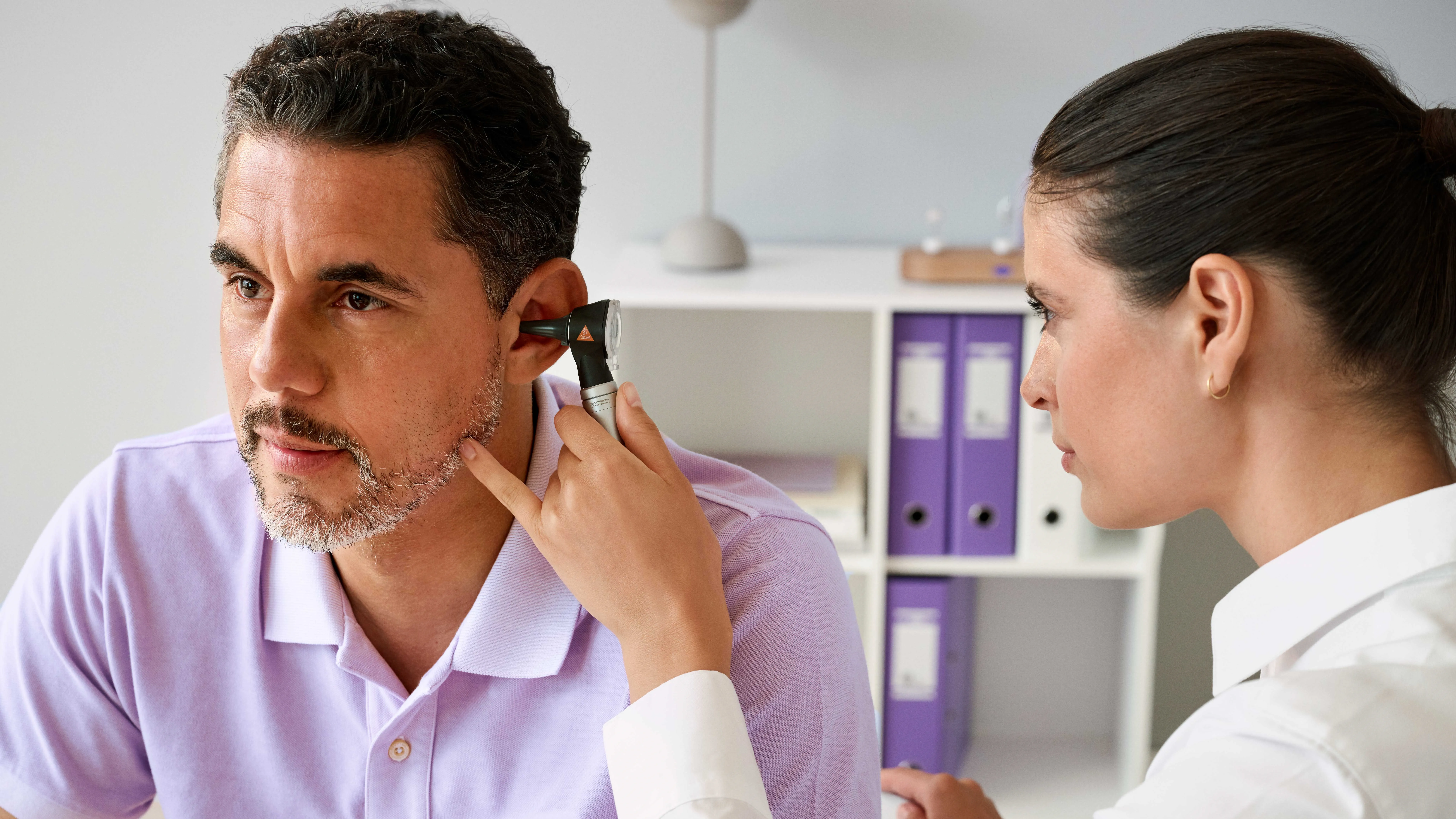

- The hearing aid fitting allows a device to be personalized to your specific hearing loss and lifestyle.
- Personalized fittings outperform generic over-the-counter devices.
- Hands-on practice builds your confidence in using devices in everyday life.
- Follow-up support enables your long-term hearing success.
What to Expect
What Is the First Hearing Aid Fitting Appointment Like?
How Long Is a Hearing Aid Fitting Appointment?
A hearing aid fitting is typically a simple appointment. Most visits last between 60 and 90 minutes and focus on tailoring support to your daily hearing needs1.
You may feel more comfortable attending your appointment with a partner, friend, or family member. A trusted companion can help the appointment feel calmer and more grounded, offering both emotional support and a familiar perspective.

Reviewing Your Hearing Test Results
Before the physical fitting of your hearing aids, the hearing aid fitting process usually begins with a conversation where your hearing care professional will review your hearing test results and talk with you about your lifestyle.
You might discuss things like work meetings, restaurants, music, phone calls, or time with family.
This step is important because hearing aids are not programmed generically; they’re customized around your hearing profile and your hearing priorities.
Once you’ve discussed your needs, your hearing care professional will guide you through a few suitable hearing aid options, explaining each one so you can decide together what feels right to try. They’ll then gently place the chosen device in your ears. Nothing is rushed; your comfort and confidence are the priorities.
Your hearing care professional will also show you the different types and designs of hearing aids that can work for your hearing needs so that you can choose something that aesthetically works for you.
You also have the option to choose from different hearing aid colors that can match your lifestyle.

How the Hearing Aids Are Fitted
How Is the Device Fitted?

Real-Ear Measurement
The process
Your hearing care professional gently places a very small, soft tube with a microphone into your ear canal alongside the hearing aid.What it measures
This microphone measures how sound is delivered inside your ear while the device is working.Why it’s important
Because every ear canal is shaped slightly differently, this step confirms the hearing aid is providing the right level of amplification for your specific hearing prescription, your ear canal acoustics and the selected hearing device capabilities.The benefit
It only takes a few minutes and helps make the fitting more precise, ensuring your hearing aids better support your everyday listening needs. You’ll be guided through each step, so you know exactly what’s happening.
Programming Your Hearing Aids
Custom Fittings vs. OTC Hearing Aids
By using real-ear measurement, your hearing care professional customizes the device to your ear canal acoustics and your specific hearing loss. This is in conjunction with functional results, such as speech understanding and feedback from your own experiences, to ensure that you are getting the best out of your hearing aids.
This personalized approach is important because over-the-counter (OTC) devices, although convenient, are not suitable for all types of hearing loss and provide more general amplification with limited fine-tuning, which can impact clarity and comfort compared to a custom fit3.

Wearing Your Hearing Aids
Learning How to Use Your Hearing Aids

Hands-on Practice: Your Essential Guide
Insertion and removal
Start by practicing how to insert and remove the hearing aids yourself until you feel confident4.Controls and features
Learn about adjusting volume, switching listening programs, or using a smartphone app, and when to use each feature (e.g., in quiet or noisy environments, or on the phone)4.Power management
Basic hearing aid care
Your hearing care professional will show you simple daily steps like wiping devices, cleaning strategies and hacks, checking for wax, and safe storage to keep your devices performing well4.A positive mindset
Mentally preparing yourself with realistic expectations and perseverance can add to a good start in your journey to better hearing.
Adjusting to Your Hearing Aids
The Adjustment: How It Will Feel
Your hearing care professional will talk through what you might notice in the first days or weeks of adapting to hearing aids4.
Some sounds, like footsteps, rustling paper, or the hum of appliances, may seem louder or different than you remember.
This happens because your brain is reconnecting with sounds it may not have heard clearly for a while. This is normal and expected.
When first adapting to hearing aids, your hearing care professional may advise beginning in quieter environments, wearing your hearing aids for several hours at a time, and gradually increasing use as you become more comfortable.
These simple steps can help your brain adapt more smoothly while you build confidence with your new hearing aids.

Support is always available
Sources:
1 HearUSA: Hearing aid buyer’s guide. (2025): hearusa.com/hearing-aids/buyers-guide/
2 Signia Pro: Real ear measurement. (2026): signia-pro.com/en-au/business-support/unity-4/real-ear-measurement/
3 Audiology Research: Gain analysis of self-fitting over-the-counter hearing aids: A comparative and longitudinal analysid. (2024): pmc.ncbi.nlm.nih.gov/articles/PMC11851972/
4 RNID: Getting used to hearing aids. (2026): rnid.org.uk/information-and-support/hearing-loss/hearing-aids/getting-used-to-hearing-aids/tips-for-getting-used-to-hearing-aids/