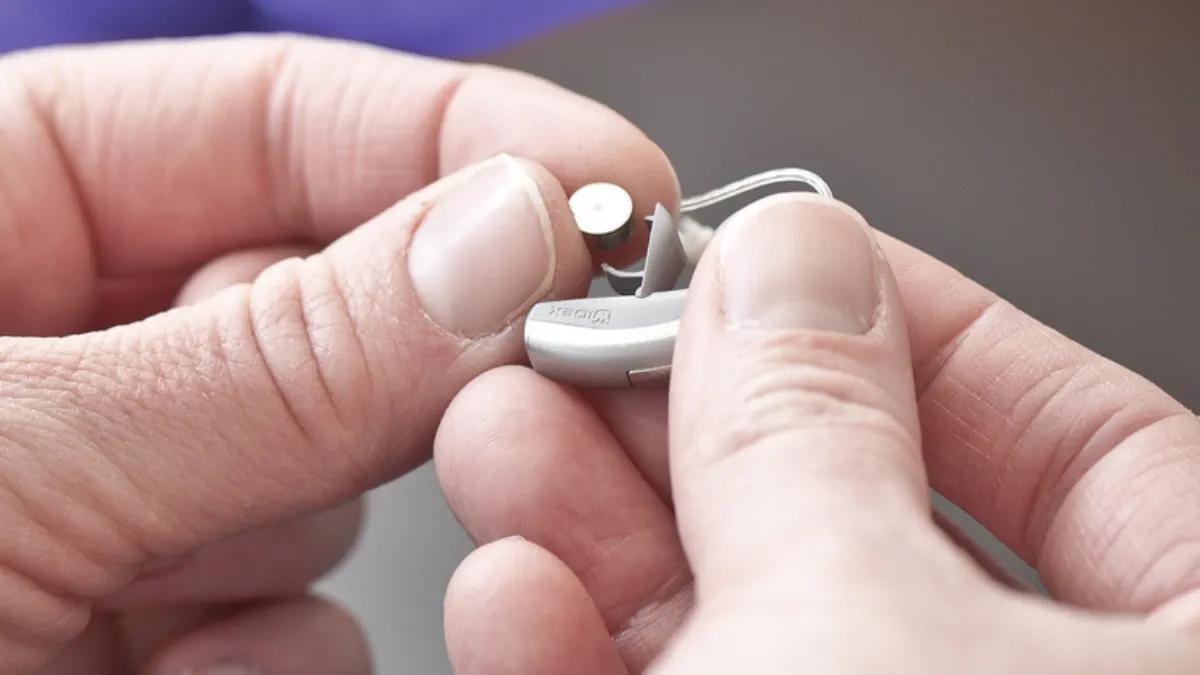
Rechargeable vs. Battery Hearing Aids: Unpacking the Long-Term Costs and Convenience

Rechargeable vs. Battery Hearing Aids
Why Rechargeable Hearing Aids Are the Way of the Future

Cost saving
They help you save by reducing the ongoing expense of buying replacement batteries and increasing battery costs.
Professionals recommend
Many hearing care professionals recommend rechargeable hearing aids because they offer a significant upgrade in both convenience and technology.
Handling
They are easier to manage, with charging docks that don’t require handling small batteries. This is an ideal feature for people with limited dexterity.1
Worry-free usage
They also give you extra peace of mind, knowing your hearing aids are powered up and ready to go every day.

"Rechargeable hearing aids typically last most of the day. Usually around 24 to 36 hours, and generally need to be charged overnight. This is convenient, as you can place the hearing aids on charge while you sleep. The devices take approximately four hours to fully charge. Some rechargeable models also come with portable charging cases that store additional charges like a power bank, which is particularly useful for people on the go and those who travel frequently."

A New Hearing Experience is Waiting For You
Hearing aids have had a profound and positive impact on users, boosting quality of life2, well-being, environmental awareness, and communication.
If you’ve already experienced the life-changing benefits of hearing aids and are ready to get the latest in technology, then rechargeable hearing aids might be the perfect next step for you.

How Long Do Rechargeable Hearing Aids Last?
Rechargeable Hearing Aids Have Greater Longevity
Disposable batteries used in traditional hearing aids vary in how long they last – from just a few days up to about three weeks5, depending on type and use. That means buying multipacks, carrying extras, and frequently handling used batteries.
How do rechargeable hearing aids compare?
36 hours of usage
A full charge can last up to 36 hours (with about five hours of streaming), giving you reliable, worry-free power all day with just one overnight charge.
30 min quick charge
If you ever need a quick boost, just 30 minutes in the charger delivers four to five hours of emergency power.7
4-5 years cycle life
Rechargeable hearing aids typically last four to five years before replacement, reducing both hassle and cost over time.
And What About the Costs?
Rechargeable hearing aids usually cost the same upfront as battery-powered models at HearUSA.
Some insurance plans may include a small upgrade fee, but many people still find rechargeable options more convenient and cost-effective in the long run.

Environmental Impact of Hearing Aid Batteries
The True Cost of Disposable Batteries

Environmental choice
If you care about sustainability, rechargeable hearing aids provide a much more environmentally friendly choice compared to battery-operated devices.

65% reduced impact
Research shows that lithium-ion rechargeable hearing aids can reduce environmental impact by 65% compared to similar models using disposable batteries.4


Benefits At a Glance
Benefits of Rechargeable Hearing Aids

No battery exchange
Eliminate the hassle of changing small batteries, making daily use simple – especially for clients with limited dexterity or vision challenges
Cost optimization
Remove the ongoing cost and inconvenience of buying disposable batteries
Carbon footprint
Reduce your carbon footprint by cutting down on battery waste
Cutting-edge features
Uninterrupted access cutting-edge features, like Bluetooth streaming and AI-powered noise reduction
Connectivity
Connect easily to your smartphone for effortless control
All-day power
Deliver consistent, reliable power and reduce the risk of unexpected battery drain. Provide all-day power so you can hear confidently from morning to night
Independence
Empower your independence: use your hearing aids with confidence, no weekly battery replacements needed
No corrosion
Help prevent issues like battery corrosion

Making the Switch: What to Consider
Sources:
1. The Hearing Review: Roundtable: Why Rechargeable Hearing Aids Are Trending (2 May 2024): https://hearingreview.com/hearing-products/hearing-aids/roundtable-why-rechargeable-hearing-aids-are-trending
2. Avierinos, R. J. et al. (2024) ‘Meaningful life changes following hearing aid use: a qualitative user perspective’, International Journal of Audiology, 64(5), pp. 471–480. https://doi.org/10.1080/14992027.2024.2376043
Kumar, S., Biradar, K., Marlapudi, S. K., & Dutta, A. (2024). Hearing aids and quality of life: a psychological perspective. Indian Journal of Otolaryngology and Head & Neck Surgery, 76(1), 852-857.
Morita, Y., Yagi, C., Wada, T., Fujisaki, T., Ohtaki, H., Kitazawa, M., ... & Horii, A. (2024). The impact of hearing aids on cognitive function and quality of life in patients with hearing impairment: A cross-sectional study. Auris Nasus Larynx, 51(4), 708-712.
Wolff, A., Houmøller, S. S., Tsai, L. T., Hougaard, D. D., Gaihede, M., Hammershøi, D., & Schmidt, J. H. (2024). The effect of hearing aid treatment on health-related quality of life in older adults with hearing loss. International Journal of Audiology, 63(7), 500-509.
3. World Health Organization. Deafness and Hearing Loss https://www.who.int/news-room/fact-sheets/detail/deafness-and-hearing-loss
4. Signia: Comparison of battery solutions for hearing aid devices (14 December 2021): https://www.signia-pro.com/en-au/blog/global/2021-12-14_comparison-of-battery-solutions-for-hearing-aid-devices/
5. Hear Canada: Hearing Aid Batteries: https://www.hearcanada.com/hearing-aids/batteries/
6. Signia: All the power of Signia IX in a small, attractive hearing aid: https://www.signia.net/en/hearing-aids/integrated-xperience/pure-charge-go-ix/bluetooth-connectivity-transformed/
7. Bloom Hearing: Rechargeable Hearing Aids: https://www.bloomhearing.com.au/hearing-aids/rechargeable-hearing-aids/
8. Hear.com: How long do rechargeable hearing aids last? https://www.hear.com/resources/hearing-aids/how-long-do-rechargeable-hearing-aids-last/
9. Hear Canada: Hearing Aid Technology in 2025 (19 February 2025): https://www.hearcanada.com/blog/2025-02--hearing-aid-technology-in-2025
10. Signia: The new Pure Charge&Go BCT IX: https://www.signia.net/en/hearing-aids/integrated-xperience/pure-charge-go-ix/bluetooth-connectivity-transformed/
Bloom Hearing: Widex Hearing Aids: https://www.bloomhearing.com.au/hearing-aids/widex/