
A combination of two types of hearing loss
What is mixed hearing loss?
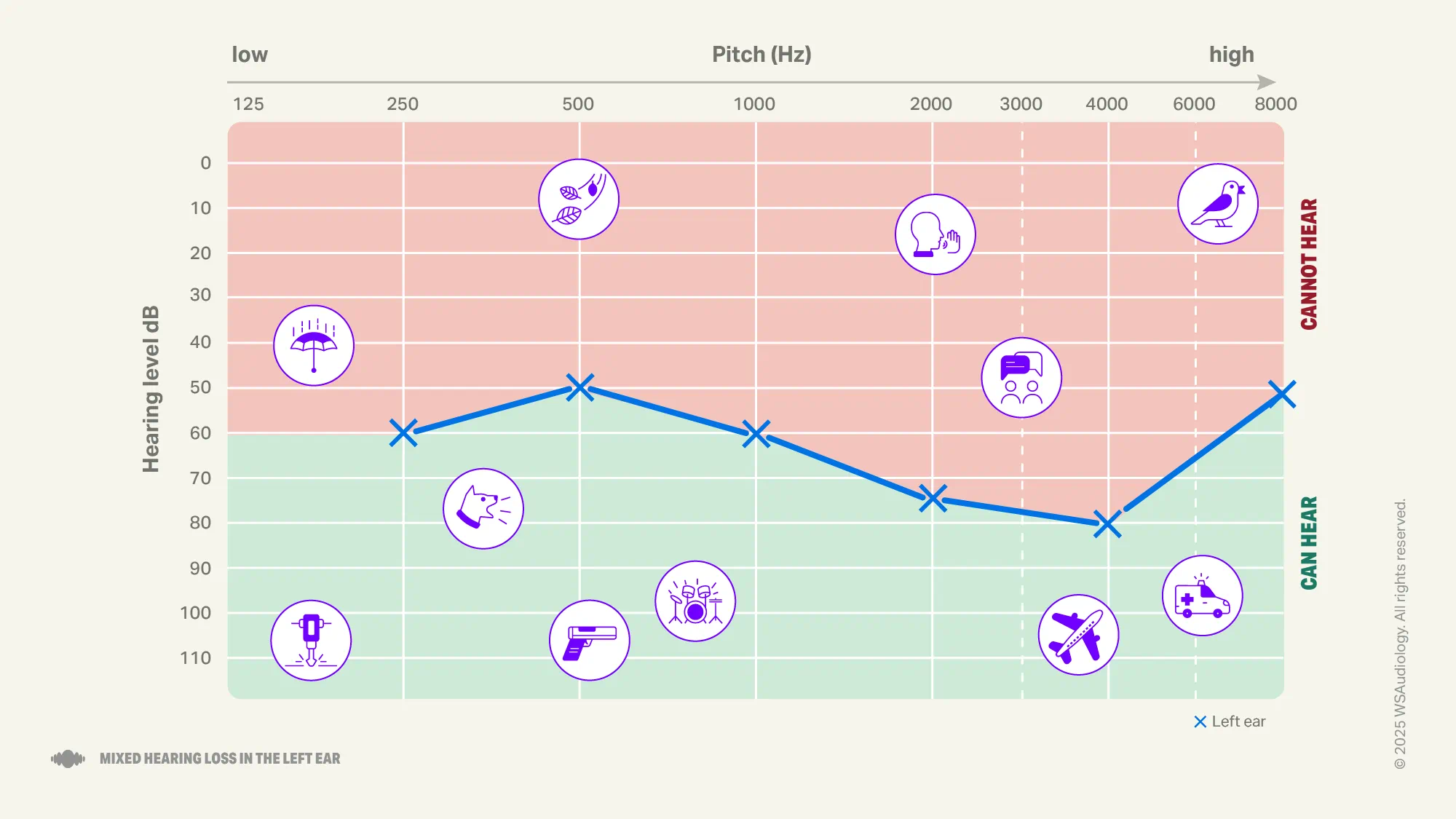
Mixed hearing loss refers to a combination of conductive hearing loss and sensorineural hearing loss in one or both ears. This means there is damage to both the outer or middle ear (conductive) and the inner ear or auditory nerve (sensorineural). It can result in difficulty hearing both loud sounds, such as fireworks and police sirens, as well as soft sounds, such as whispering and leaves rustling.
Mixed hearing loss often requires a combination of medical and hearing aid treatment.
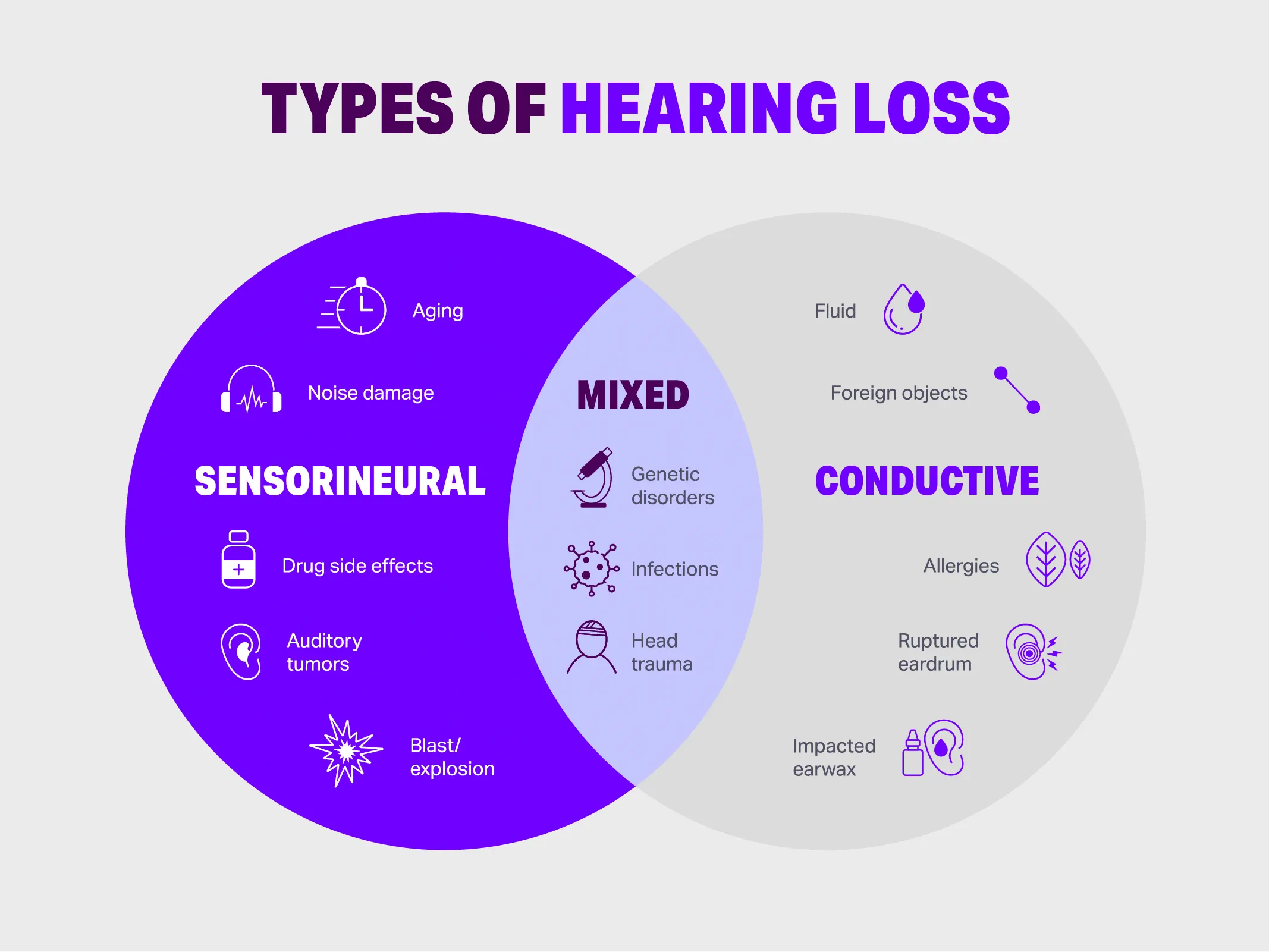
What’s the difference between conductive, sensorineural and mixed hearing loss?
More About Mixed Hearing Loss
What’s causing the problem
What's causing mixed hearing loss?
Pinpointing the cause of mixed hearing loss can be tricky. After all, you’re dealing with both conductive and sensorineural hearing loss at the same time, each bringing its own set of challenges.
Since mixed hearing involves elements of both, a person may face a combination of these factors. These overlapping effects makes diagnosis and treatment more complex, which is why a hearing test is so important.
Conductive Component Causes
 Ear infections or chronic middle-ear disease
 Fluid behind the eardrum
 Damage to the eardrum or middle-ear bones
 Benign growths, cysts, or foreign objects in the ear

Sensorineural Component Causes
 Long-term noise exposure
- Inner-ear damage from illness or medications
 Genetic conditions
 Head or ear trauma









How mixed hearing loss is diagnosed?
Diagnosing mixed hearing loss usually starts with a comprehensive hearing test that will look at each part of the auditory system.
Your Hearing Care Professional will check your ears with a physical exam, use speech recognition tests, or may recommend further evaluation with a specialist like an ear, nose and throat specialist (ENT). These steps help identify whether the issue comes from the outer or middle ear, the inner ear, or both, so you can continue with the right treatment plan for your ear health.

Mixed Hearing Loss: FAQ
Is mixed hearing loss permanent?
What are the common causes of mixed hearing loss?
What does a mixed hearing loss audiogram look like?
Do hearing aids help with mixed hearing loss?


Types of hearing loss
Explore more options