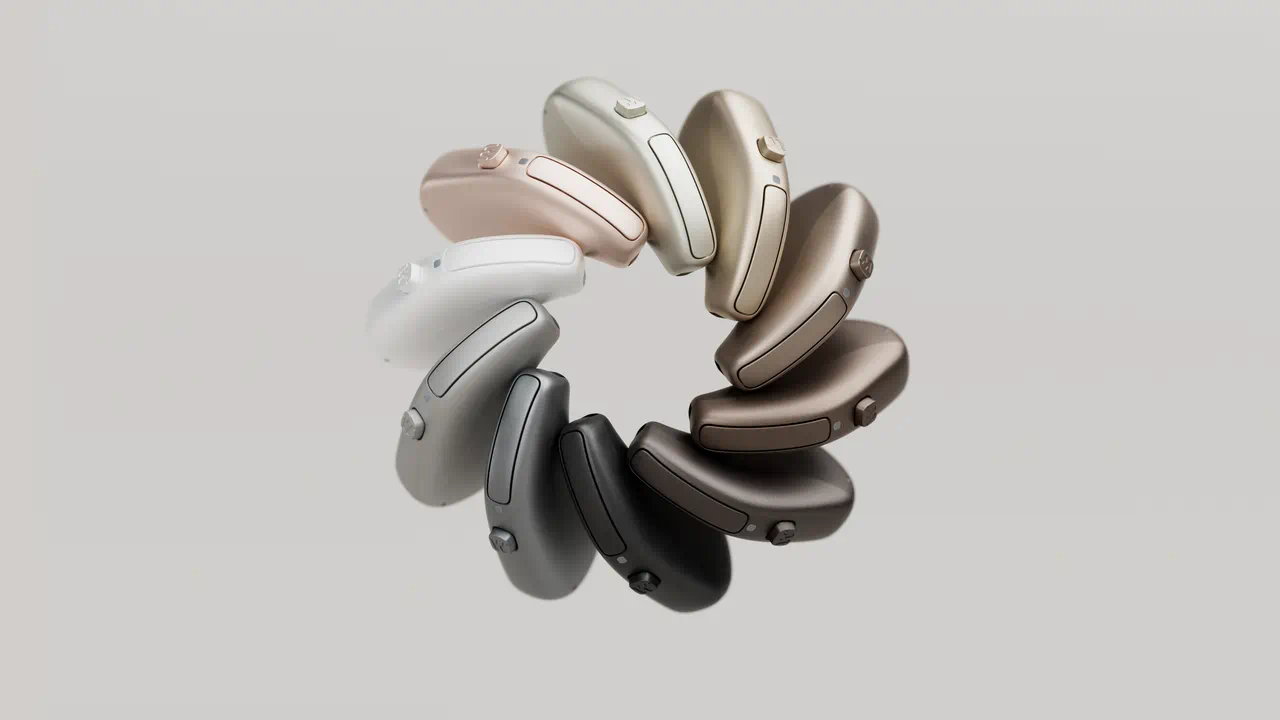
Smarter Hearing Starts Here: How AI Hearing Aids Adapt to You in Real Time
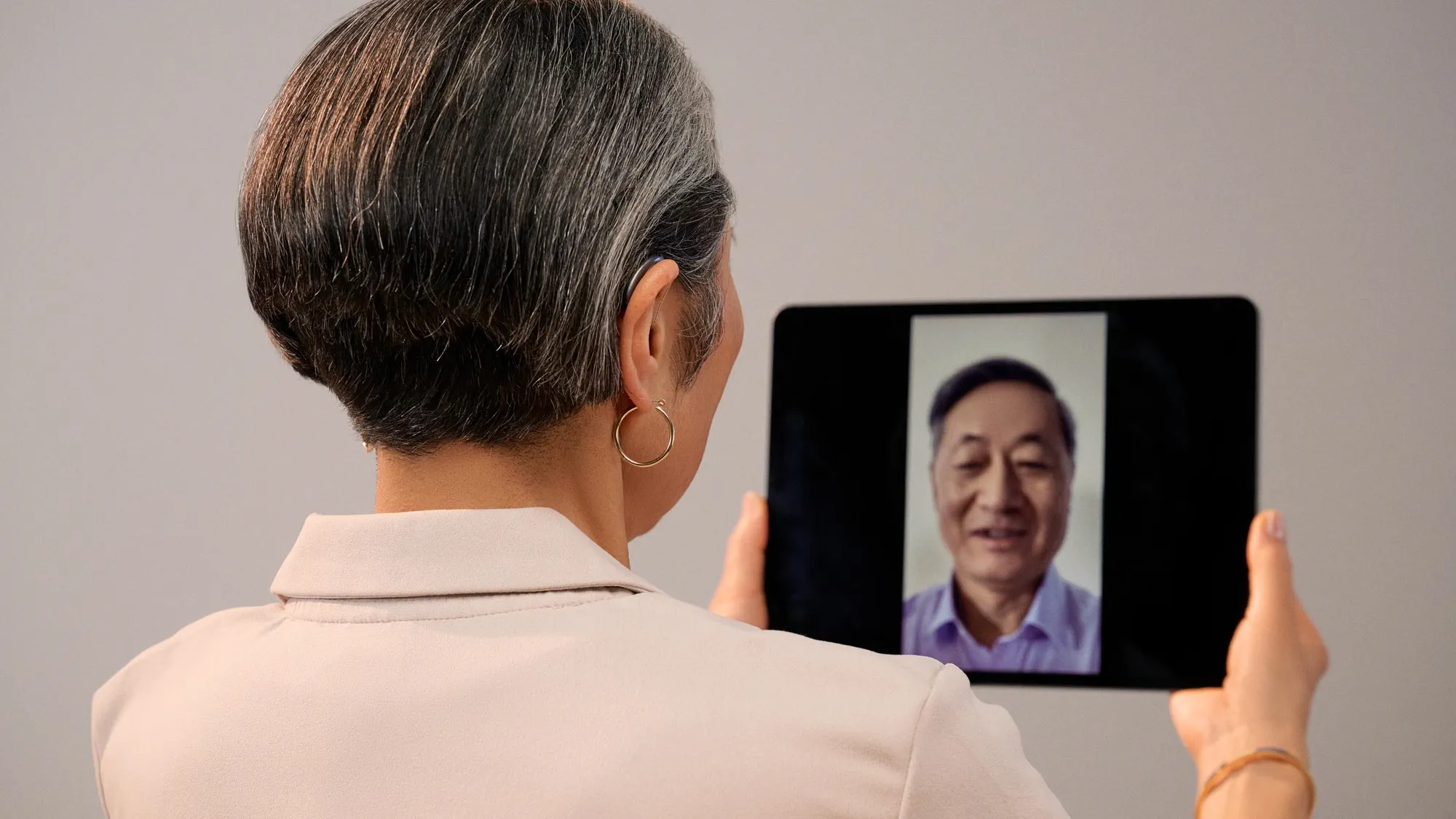

- AI hearing aids use advanced algorithms to analyze sounds, prioritize speech, and reduce noise in real time.
- Modern high-tech AI hearing aids learn user preferences, provide personalized adjustments and enable remote fine-tuning through smartphone applications.
- AI hearing aids have many benefits, including improved speech clarity in noise, reduced listening effort, and integration with health tracking features.
To discover how advanced AI features can enhance your daily listening, visit your nearest hearing care center and speak with one of our experts about the latest AI hearing aid options.
Understanding AI Hearing Aid Technology
What Are AI Hearing Aids, and How Do They Work?
Artificial Intelligence (AI) refers to technology that allows electronic devices to analyze information, recognize patterns, and make automated decisions.
In hearing technology, AI is software (essentially the ‘brain’ that operates the hearing aid) built into the device that analyzes surrounding sounds to improve the listening experience.
How Does the Technology in AI Hearing Aids Work?
AI algorithms are the step-by-step mathematical ‘recipes’ that analyze these sounds to identify specific patterns, such as speech, background noise, wind, or music1.
These algorithms allow the hearing aid to instantly decide which sounds to prioritize and which to suppress.
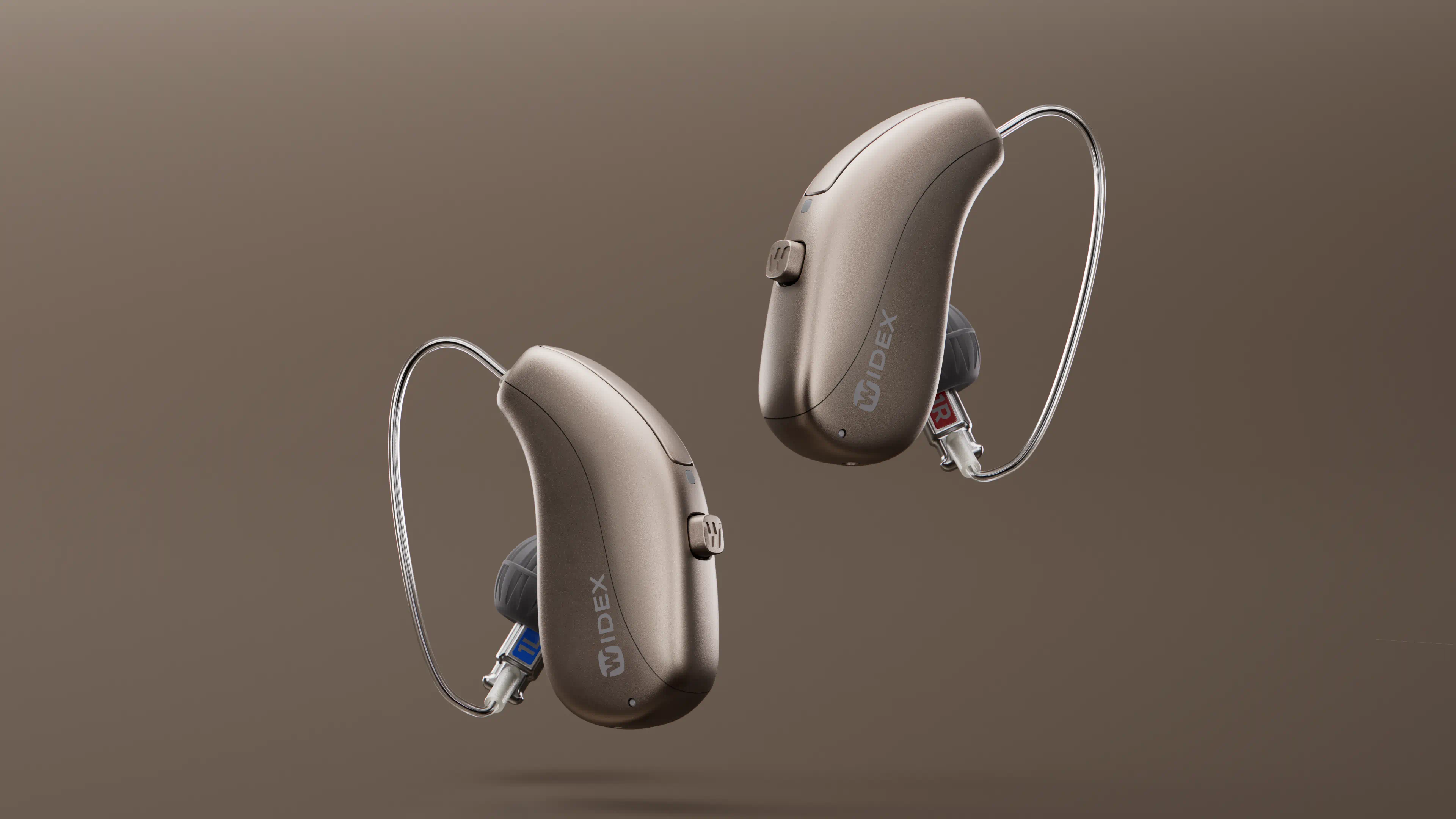
How Does AI Hearing Aid Technology Differ From Traditional Hearing Aids?

Deep Neural Networks (DNNS) in Action
Training
These systems are trained using millions of recordings of real-life listening situations, such as conversations in restaurants, traffic noise, music, and background chatter.Recognition
By learning these patterns, the hearing aid can better recognize which sounds are speech and which are background noise.Real-time adjustment
As a result, the device can automatically adjust its settings in real time, helping speech stand out while reducing unwanted noise for a more effortless listening experience2.
For example, when you move from a quiet room into a busy restaurant, some hearing aids can detect the change in sound and automatically reduce background noise while enhancing speech1.


AI That Adapts to Your Hearing
Personalized AI: How Smart Hearing Aids Learn From You
Some AI hearing aids learn from user adjustments over time. When a wearer changes the volume or sound balance via a smartphone app, the device records these preferences. Eventually, the hearing aid can automatically apply these personalized settings when similar environments are detected4.
Advanced models now use mobile apps and telehealth platforms to provide personalized feedback loops. This involves an ongoing exchange of information:
Hearing Aid Data
User Input
Professional Adjustments

AI Hearing Aids vs Regular Hearing Aids
Are AI Hearing Aids Better Than Traditional Models?

The Primary Advantages of AI Hearing Aids Include:
- Automatic adjustments: Seamless transitions between sound environments1.
- Reduced listening effort: The brain works less to “filter” noise, which helps reduce mental fatigue6.
- Speech clarity: Enhanced ability to isolate voices from background chatter, with some DNN models improving sentence recognition scores by up to 19% in loud noise7.
- Memory: Emerging evidence suggests that two to four months of consistent use can lead to measurable improvements in working memory performance8.
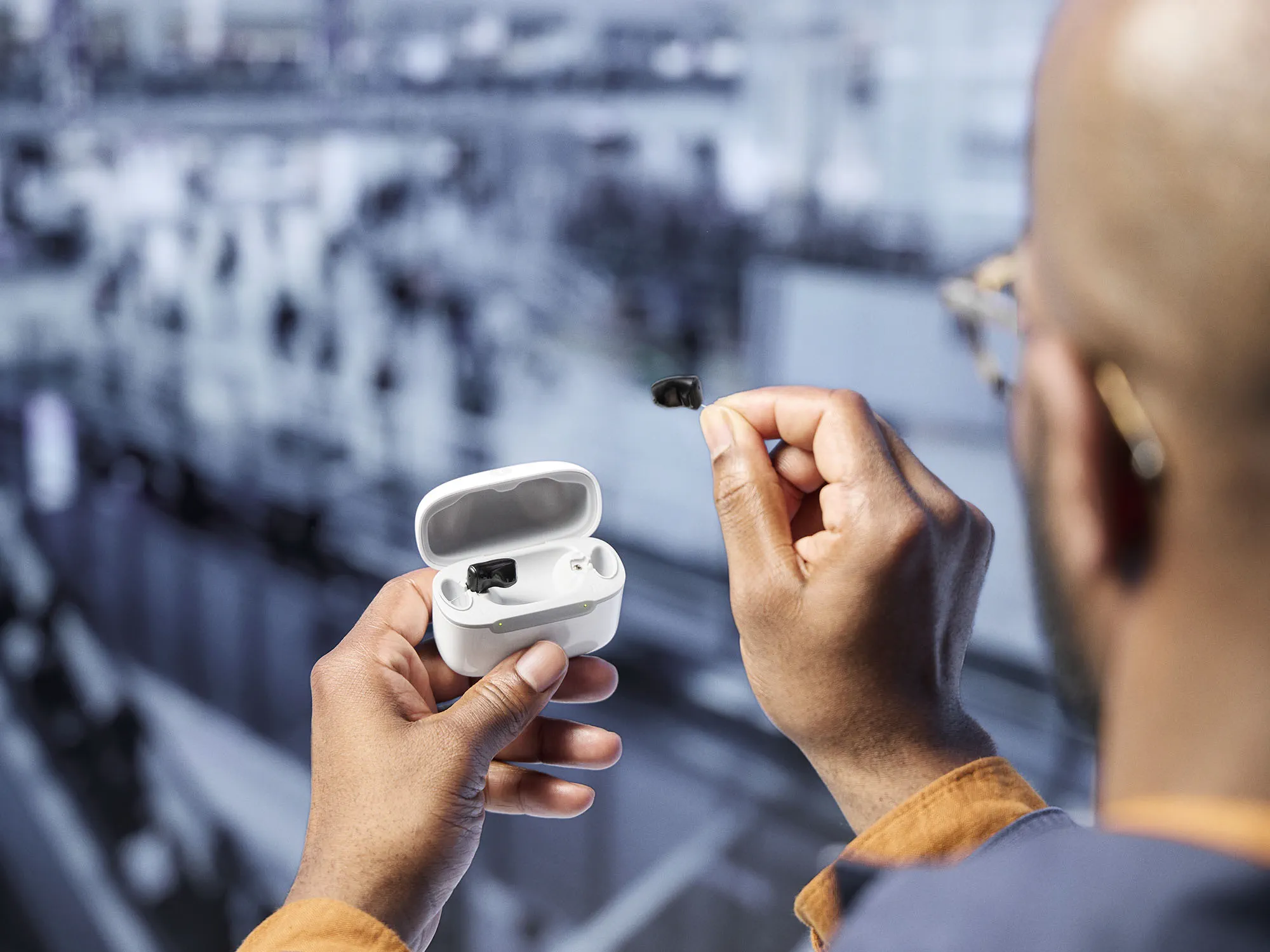
4 Key Benefits of AI Hearing Aids
- 1.
Automation
Minimizes manual volume or program changes1. - 2.
Improved intelligence
Enhances speech understanding while suppressing noise2. - 3.
Smart integration
Connects to smartphones for streaming (audio such as phone calls, music, or videos, can be sent directly from the smartphone and heard in the hearing aids) and remote adjustments4. - 4.
Health and safety
Some AI hearing aids include safety and activity monitoring features, such as detecting sudden movements or tracking daily activity levels. Pilot studies have found these systems to be highly sensitive and reliable in identifying falls and other movement-related events during everyday activities4.
AI’s Impact on Hearing Health
The Future of Hearing Health: AI’s Role in Advancing Care
AI is transforming hearing aids into smart lifestyle devices that enable healthy hearing. Beyond sound, these devices support remote care, allowing hearing professionals to adjust settings based on data collected from the user’s actual environment9.
As these algorithms (sets of computer instructions that help the hearing aid analyze and process sounds) continue to gather data, sound processing will become even more precise, further integrating hearing health into the broader digital wellness ecosystem.

Experience Smarter Hearing Technology
Sources:
1 South African Education Research Association (SAERA): Importance of artificial intelligence and advanced hearing technology on people living with hearing impairment. (2024): saera.eu/en/wp-content/uploads/2024/10/2.-Mwangi-E.-2024.-Importance-of-Artificial-Intelligence-and-Advanced-Hearing-technology-on-people-living-with-Hearing-Impairment.-SAERA.pdf
2 arXiv: Advances in intelligent hearing aids: Deep learning approaches to selective noise cancellation. (2025): doi.org/10.48550/arxiv.2507.07043
3 Frontiers in Audiology and Otology: Effectiveness of deep neural networks in hearing aids for improving signal-to-noise ratio, speech recognition, and listener preference in background noise. (2025): www.frontiersin.org/journals/audiology-and-otology/articles/10.3389/fauot.2025.1677482/full
4 Sensors: A review of machine learning approaches for the personalization of amplification in hearing aids. (2024): doi.org/10.3390/s24051546
5 Exploration of Digital Health Technologies: AI in biomedical science: Innovations, challenges, and ethical perspectives. (2025): www.explorationpub.com/Journals/edht/Article/101144
6 Trends in Hearing: The impact of hearing aids on listening effort and listening-related fatigue - Investigations in a virtual realistic listening environment. (2024): doi.org/10.1177/23312165241265199
7 Journal of Clinical Medicine: DNN-based noise reduction significantly improves bimodal benefit in background noise for cochlear implant users. (2025): pmc.ncbi.nlm.nih.gov/articles/PMC12346913/
8 American Journal of Audiology: Impact of short-term hearing aid use on cognitive performance, noise acceptance, and self-perceived benefit. (2025): doi.org/10.1044/2025_AJA-25-00039
9 Frontiers in Digital Health: Real-world hearing aid usage patterns and smartphone connectivity (2021): researchgate.net/publication/354022918_Real-World_Hearing_Aid_Usage_Patterns_and_Smartphone_Connectivity