Ask an Expert: Do Hearing Aids Help With Tinnitus?


- Tinnitus is the experience of sounds in the ears or head, such as ringing or buzzing, when no sound is present in the external environment.
- Hearing aids provide tinnitus relief by amplifying speech sounds and reducing the perception of tinnitus.
- The most optimal tinnitus relief results come from professionally fitted hearing aids combined with a broader management plan, including counseling and sound therapy.
Q: What Is Tinnitus and How Is It Caused?
A: Tinnitus is the sensation of a sound described as a ringing, buzzing, or hissing, that has no external source, heard only by the person experiencing it1.
It is not a disease but a symptom, most often triggered by damage to the inner ear from noise exposure, age-related hearing loss, or certain medications, although it can also be linked to ear infections, head or neck injuries, and cardiovascular conditions.
Some types of tinnitus may be caused by a temporary condition, such as ear infection, and can be resolved with treatment.
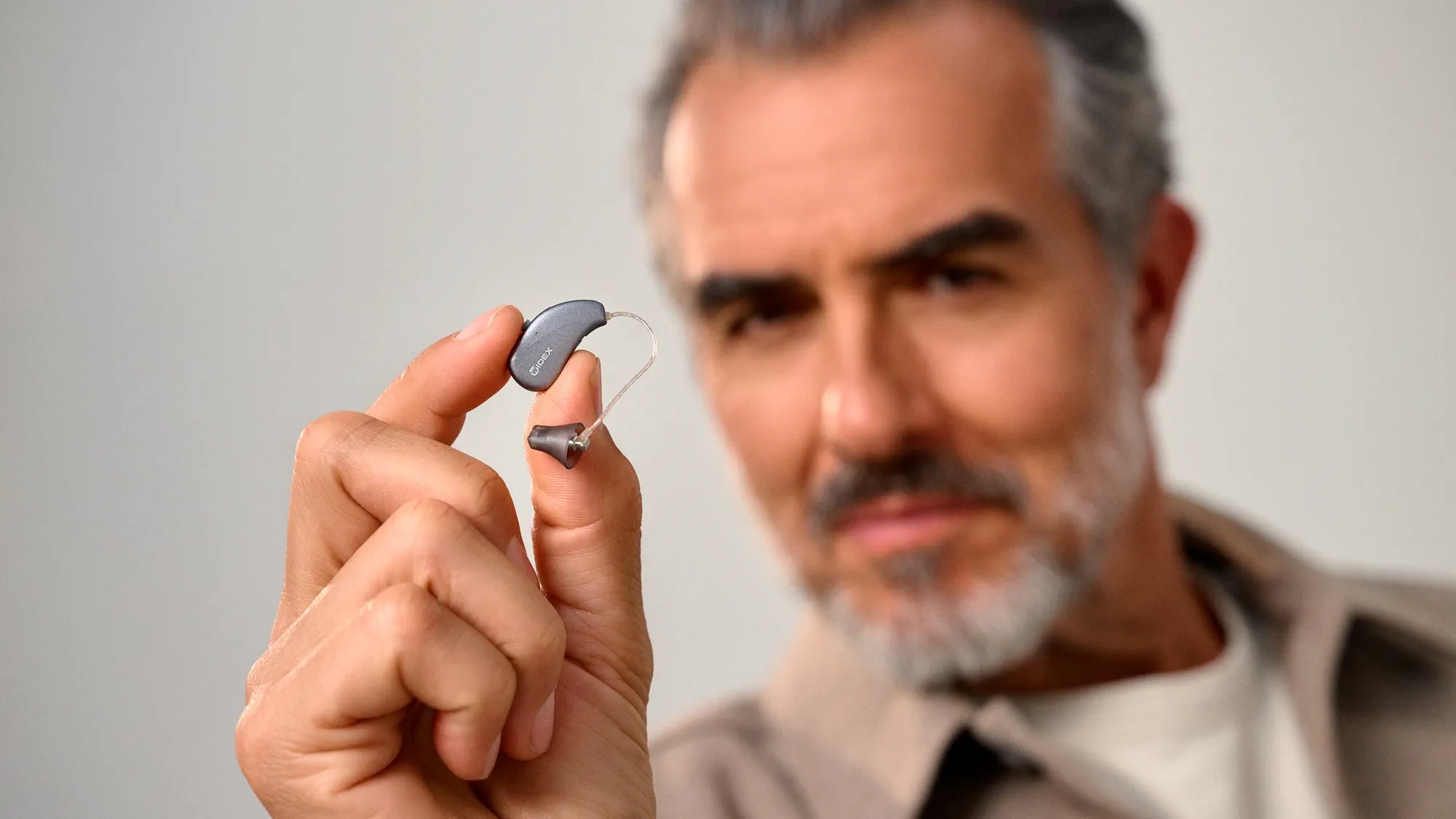
However, in the case of hearing loss, when the delicate structures in the inner ear are damaged because of hearing loss, they can generate internal “noise”, much like a broken radio. This is often what we call tinnitus. Hearing aids amplify sound input and can quieten that internal chatter.
That said, hearing aids are unlikely to address tinnitus caused by other factors like medication side effects, or blood circulation problems, so it is always worth consulting a professional first.

Q: Can Hearing Aids Help With Tinnitus Relief?
Q: How Do Hearing Aids Work to Reduce or Manage Tinnitus?
Less Strain, Less Stress
Calming an Overactive Brain
Habituation
The research backs this up. An European study5 found hearing aids reduced tinnitus-related distress across a wide range of patients, regardless of tinnitus type or severity of hearing loss.
Meanwhile, studies show6 professionally fitted hearing aids outperform poorly fitted ones in reducing both tinnitus loudness and distress, which is why seeing a qualified hearing care professional matters.

Simple Ways to Manage Tinnitus

Sound therapy
Background noise (fan, music, white noise)
Stress management
Relaxation can reduce how loud tinnitus feels
Good sleep habits
Fatigue often makes tinnitus worse.
Q: Do Hearing Aids Cure Tinnitus?
Q: How Quickly Do Hearing Aids Provide Tinnitus Relief?
Q: What Is Tinnitus Masking, and How Does It Help?
A: Tinnitus masking means using an external sound to compete with or cover up the internal ringing, so the ringing becomes less noticeable rather than disappearing completely. Think of a fan running in a quiet room; the sound is still there, but your brain focuses less on it.
Tinnitus masking can work in several ways:
Direct Masking
Brain-Level Masking
Residual Inhibition

Q: Do Hearing Aids Work for Every Type and Severity of Tinnitus?
A: Not equally. Research shows hearing aids help reduce tinnitus distress across a broad range of patients and tinnitus types5.
However, individual factors, such as your age, health conditions, tinnitus type, hearing loss, and even how you emotionally respond to tinnitus, all influence the benefit you are likely to get9.

The Bottom Line

Check Your Hearing Today
Sources:
1 The Lancet: Tinnitus (2013): doi.org/10.1016/S0140-6736(13)60142-7
2 International Journal of Audiology: Hearing more to hear less: a scoping review of hearing aids for tinnitus relief (2022): doi.org/10.1080/14992027.2021.2007423
3a Trends in Amplification: The role of audiologic evaluation in progressive audiologic tinnitus management (2008): doi.org/10.1177/1084713808319941
3b Trends in Amplification: Using therapeutic sound with progressive audiologic tinnitus management (2008): doi.org/10.1177/1084713808321184
4 Neuroscience: Rationale and efficacy of sound therapies for tinnitus and hyperacusis (2019): doi.org/10.1016/j.neuroscience.2018.09.012
5 Ear and Hearing: Predictors of tinnitus symptom relief with hearing aids in a European multicenter study (2025): doi.org/10.1097/AUD.0000000000001624
6 American Journal of Audiology: Hearing aids mitigate tinnitus, but does it matter if the patient receives amplification in accordance with their hearing impairment or not? A meta-analysis (2022): doi.org/10.1044/2022_AJA-22-00004
7 Progress in Brain Research: The difference in poststimulus suppression between residual inhibition and forward masking (2021): doi.org/10.1016/bs.pbr.2020.08.010
8 Assistive Technology: Spatial masking: Development and testing of a new tinnitus assistive technology (2016): doi.org/10.1080/10400435.2015.1110214
9 BMJ Open: Logistic regression analysis of factors influencing the effectiveness of intensive sound masking therapy in patients with tinnitus (2017): doi.org/10.1136/bmjopen-2017-018050