
What to Do if Your Hearing Aids Got Wet

Take Quick Action to Dry Wet Hearing Aids
What to Do Right Away if Your Hearing Aids Got Wet
Accidents happen to the best of us. And if your hearing aids got wet, don’t panic. Instead, take immediate steps to dry and protect them.
Here’s how:
- 1.
Remove them from water or moisture immediately.
The moment you realize your hearing aids have been exposed to water, remove them. The less time they spend submerged or wet, the less chance the technology will be damaged. - 2.
Turn them off and remove the batteries, if possible.
If your devices use traditional disposable batteries, open the battery door immediately and leave it open. Take the batteries out and throw them away, as moisture can easily ruin them.
Leaving the power on while moisture is inside can cause a short circuit. Turning them off immediately breaks the electrical path, which helps protect the internal computer chips.
- 3.
Gently dry the outside with a soft cloth.
Grab a soft, clean, dry, lint-free cloth. Gently wipe down the outer hearing aid shell to remove any visible or surface moisture.
Carefully dab inside the battery compartment, too. Be very gentle so you do not bend or damage any small metal battery contacts inside.
- 4.
Avoid testing them too soon.
It can be incredibly tempting to turn your devices back on right away to see if they still work. But, testing them too soon can cause permanent damage.

Learn the Right Way to Dry Wet Hearing Aids
How to Dry Hearing Aids Safely After Water Exposure
Once you’ve completed the above steps, it’s time to focus on removing the hidden moisture that could be trapped inside your devices.
Be sure to:
#1 Use a Hearing Aid Dryer Box or Dehumidifier
After you’ve wiped off visible moisture, a dedicated hearing aid dehumidifier or dryer box is the next step and the safest way to dry hearing aids.
These specialized products use gentle air and desiccant blocks to pull out moisture. Simply place your devices inside it overnight so it can work to remove any additional moisture.
If you don’t own a drying box, you can temporarily place your devices in a closed container with dry, uncooked rice to help absorb dampness.
#2 What to Do With Rechargeable Hearing Aids
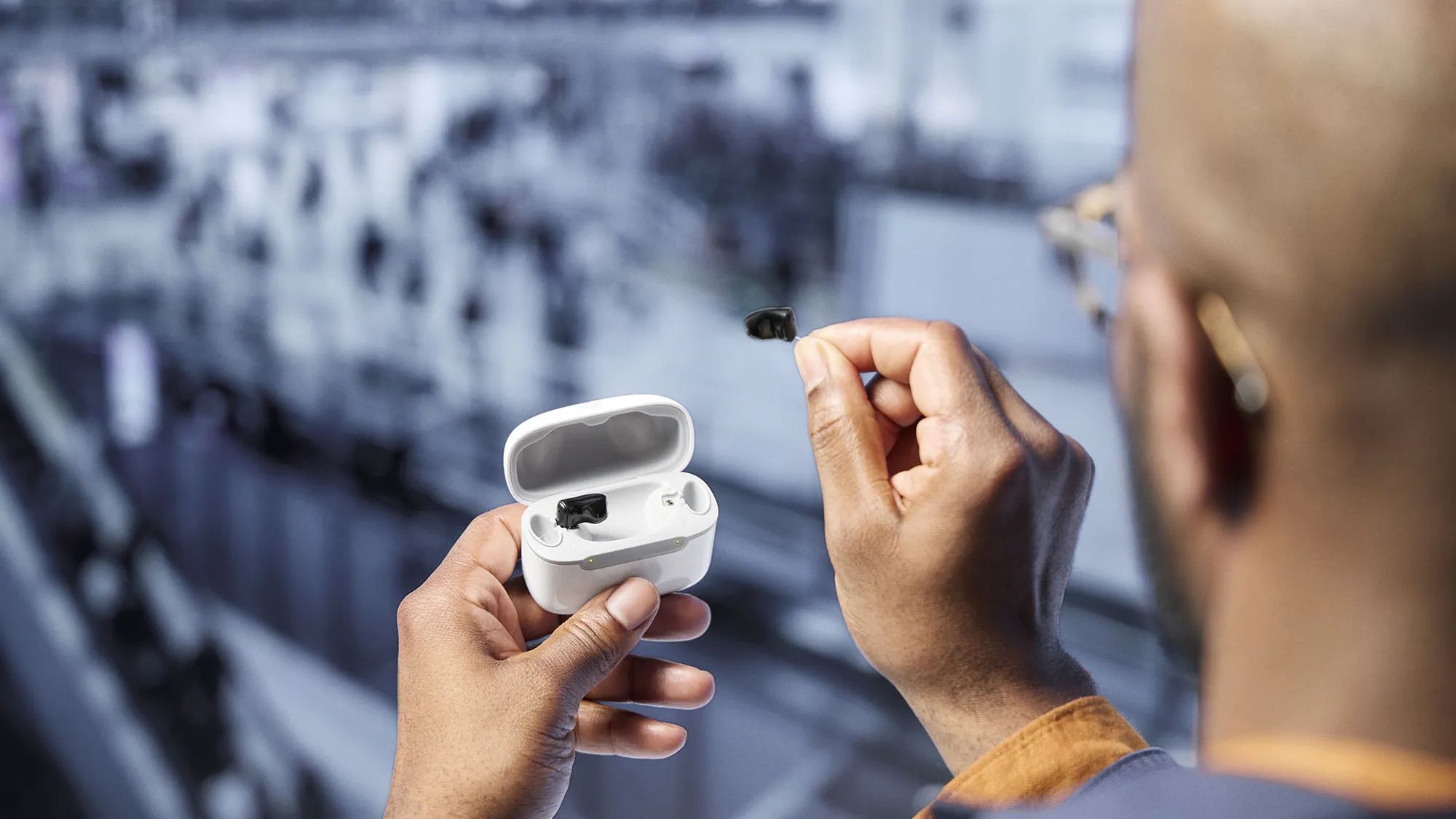
If your rechargeable hearing aids get wet, power them down using the push button immediately. Wipe the exterior completely dry, including the metal charging contacts.
Place them in a hearing aid dehumidifier or dryer box overnight. Do not place them back into their charging base until they’re completely dry.
#3 How Long to Let Wet Hearing Aids Dry
So, how long do hearing aids need to dry after water exposure? The general rule of thumb is to let them dry for 24 to 48 hours before turning them back on.
If they’re not working properly at that point, turn them off and contact your hearing specialist right away. They can inspect them for any moisture and damage.

What to Avoid When You Have Wet Hearing Aids
What Not to Do With Wet Hearing Aids
When trying to deal with water exposure, the wrong drying method can easily cause more damage than the water itself.
When trying to dry your hearing aids:
- 1.
Don’t use a hair dryer, microwave, oven or direct heat.
High heat is a big enemy of hearing aids. Using any of your household appliances and even putting them in sunlight can melt and damage external and internal parts. - 2.
Don’t shake or tap them aggressively.
Avoid shaking, tapping, or rattling your devices against anything to get the water out. These can damage your devices and force water deeper into the internal components. - 3.
Don’t place wet rechargeable devices directly into the charger.
Wet rechargeable hearing aids shouldn’t be placed in their charging case, as it can short-circuit them. Put them in a dryer box overnight and only charge again once completely dry.
How Moisture Damage Appears in Hearing Aids
Signs of Moisture Damage in Hearing Aids
Weak or Distorted Sound
Intermittent Performance or Sudden Shutdowns
Static, Crackling, or Feedback
Charging Issues or Battery Problems
Ways to Avoid Exposing Hearing Aids to Water
How to Help Prevent Hearing Aids From Getting Wet Again
Obviously, the best way to handle water damage is to avoid water and moisture entirely. But that’s often easier said than done in today’s world.
However, incorporating a few simple protective habits into your daily schedule can keep your hearing aids safe and dry.
- 1.
Remove hearing aids before showering, swimming, or bathing.
Always create a designated safe spot for your devices outside of the bathroom. Make it a strict habit to remove them before showering, swimming, or getting into a hot tub. - 2.
Protect devices from rain, sweat, and humidity.
If you live an active lifestyle or in a humid climate, consider investing in sweat bands or moisture sleeves for your hearing aids. - 3.
Use drying tools as part of your daily routine.
Don’t wait for major water exposure to start using your drying kit. Placing your devices into a dehumidifier or dryer box every night to safely remove everyday sweat and moisture.
This habit can keep your technology performing at its best for years to come and extend the lifespan of your hearing aids.
- 4.
Store hearing aids properly when not in use.
When you take your hearing aids off, keep them inside a protective case or dry box. Never leave them on bathroom counters where sinks can overflow or showers create heavy steam.
For suggestions on daily hygiene routines, review our guide on how to clean hearing aids.
Professional Care for Wet Hearing Aids
When to Contact a Hearing Care Professional
So, can hearing aids get wet and survive? Yes, many modern devices feature water-resistant coatings that protect against minor splashes and light sweat.
However, water-resistant does not mean waterproof. If your devices got wet and are acting up, it’s time to call in the experts as we mentioned earlier in this article.
As a reminder, contact your hearing care specialist if:
- Your hearing aids won’t power on or aren’t working right after drying them for 24-48 hours.
- Sound quality changes and isn’t clear.
- Your rechargeable hearing aids won’t charge properly.

Frequently Asked Questions
FAQs
Can hearing aids get wet?
What should I do if my hearing aids get wet accidentally?
Here’s what you should do if your hearing aids get wet accidentally:
- Remove them immediately from the water source and/or your ears.
- Turn them off, remove disposable batteries right away to prevent short-circuiting.
- Gently wipe the exterior and battery compartment with a soft, dry, lint-free cloth.
- Place them in a drying kit or dehumidifier. Leave the battery doors open on non-rechargeable hearing aids.
- Wait 24 to 48 hours for them to dry completely before testing them.
- Contact your HearUSA hearing specialist if your hearing aids aren’t turning on or working properly after drying completely.